
| Home | S-100 Boards | History | New Boards | Software | Boards For Sale |
| Forum | Other Web Sites | News | Index |
 |
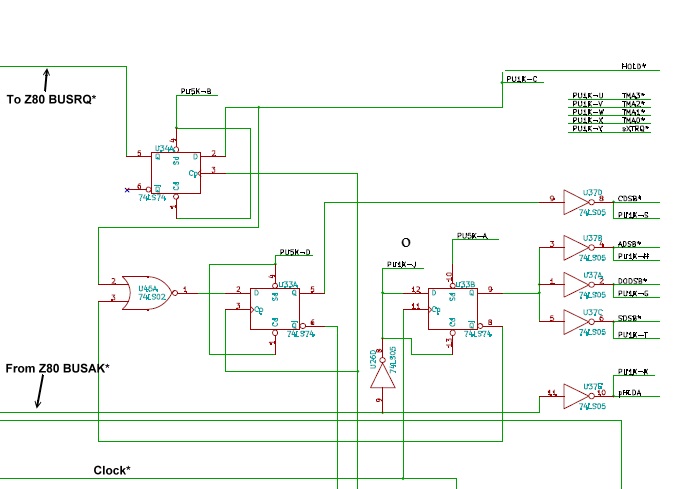
.jpg)
 |
 |
|
 |
 |
| Jumper | Function |
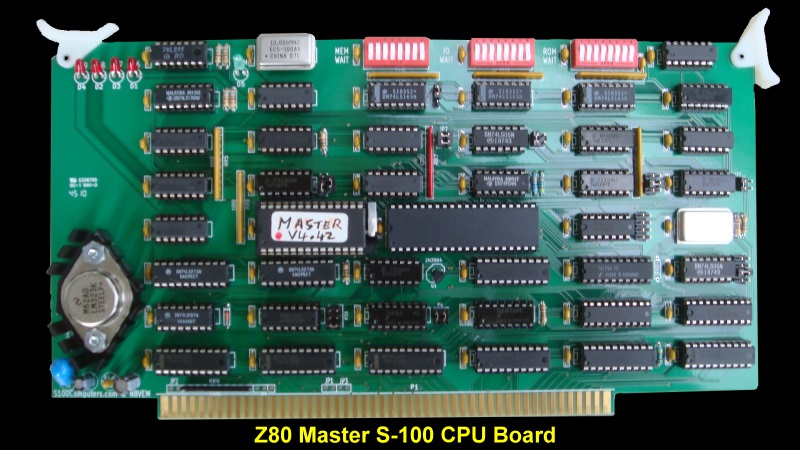
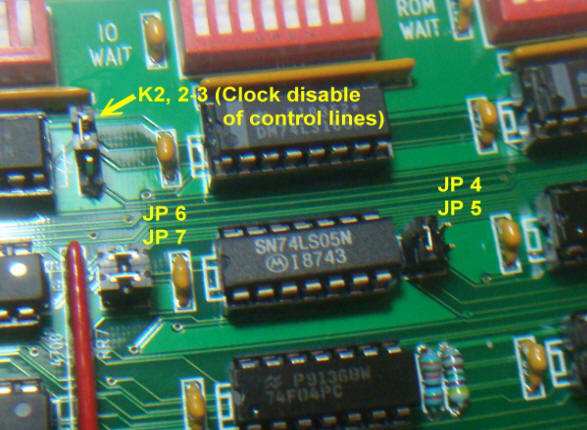
| JP5,JP6,JP4,JP7 | Used only if the board is to act as a bus master or are not generated by a front panel board. Generates Power On, Reset etc. |
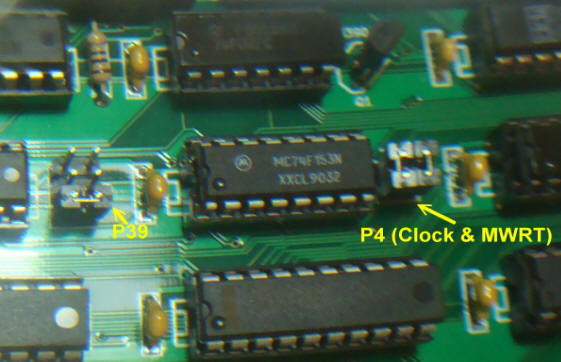
| JP4, 1-2 | Use only if no other board generates the S-100 2MHz clock signal when the Z80 is active |
| JP4, 3-4 | Use only if no other board generates the S-100 MWRT signal when the Z80 is active |
| SW4 (ROM WAIT) | Sets number of wait states for onboard EEPROM (0-8). I use 1 wait state, so switch 8 (right most switch) is closed, the rest are open |
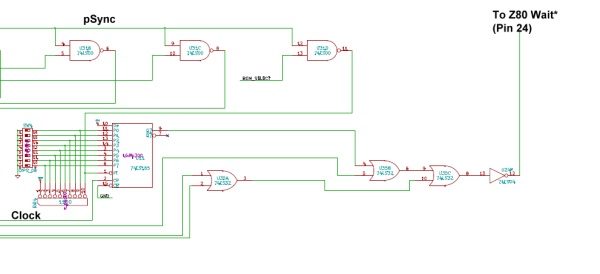
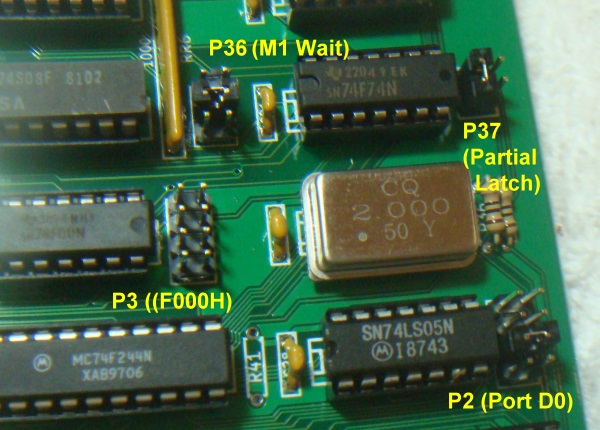
| P36 | Allows wait states. 1-2, every sINTA, 3-4, M1 memory bus cycles, 5-6 All Memory cycles. I use 3-4. |
| SW2 (ME WAIT) | Sets number of wait states for P36 options. I use 1 wait state for M1 cycles only, so switch 8 (right most switch) is closed, the rest are open |
| SW3 (I/O WAIT) | Sets number of wait states for port I/O cycles. I use 2 wait states, so switch 7 & 8 (right most switches) closed, the rest are open |
| K2 | Normally set 2-3, however older pre-IEEE 696 boards (for example the Cromemco dazzler board) often require 1-2. |
| P37 | Normally 1-2 (Partial latch mode). |
| K1, 2-3 | If NMI software is not implemented do not connect |
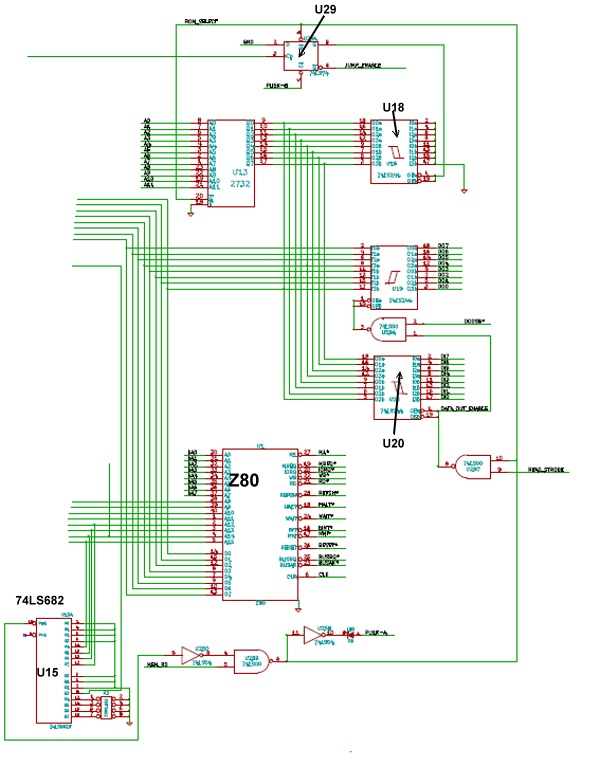
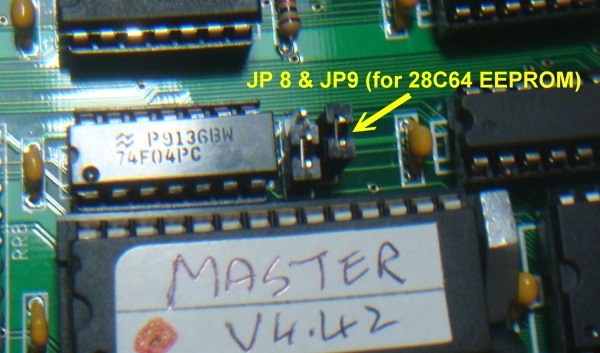
| P39, J88, JP9 | These jumpers are to configure different EPROMS and EEPROMS. (For a 28C64:- P39 5-6, JP8 1-2, JP9 closed). |
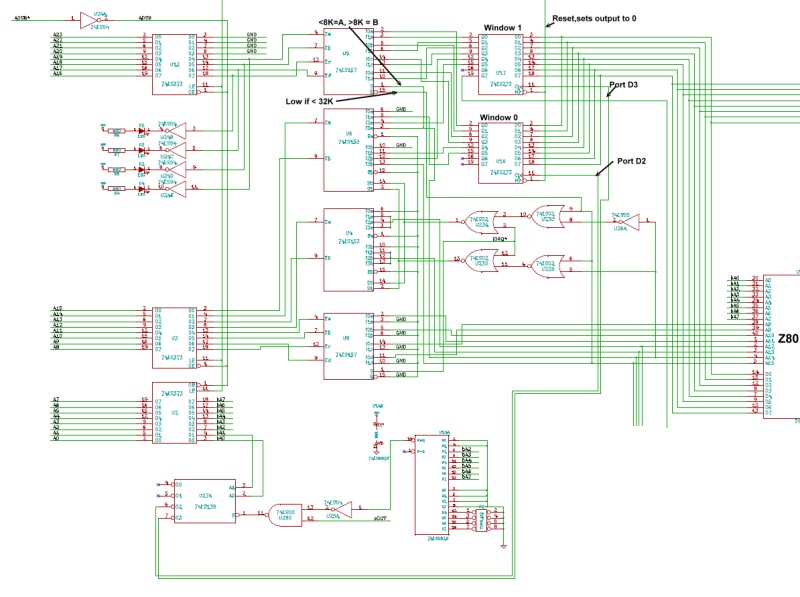
| P2, 5-6 | Memory window configuration port. I use I/O port D0H |
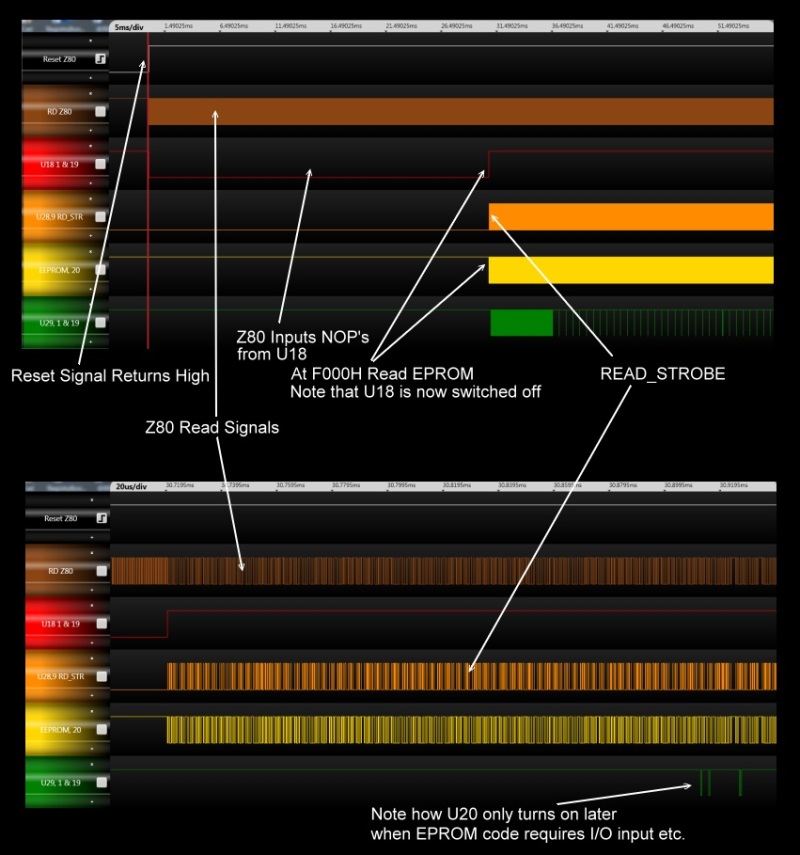
| P3. | No jumpers. This sets the PROM boot address to F000H. |
| JP1, JP2, JP3 | This provides extra ground lines on board IF ALL boards meet IEEE-696 specs. Normally unconnected. |
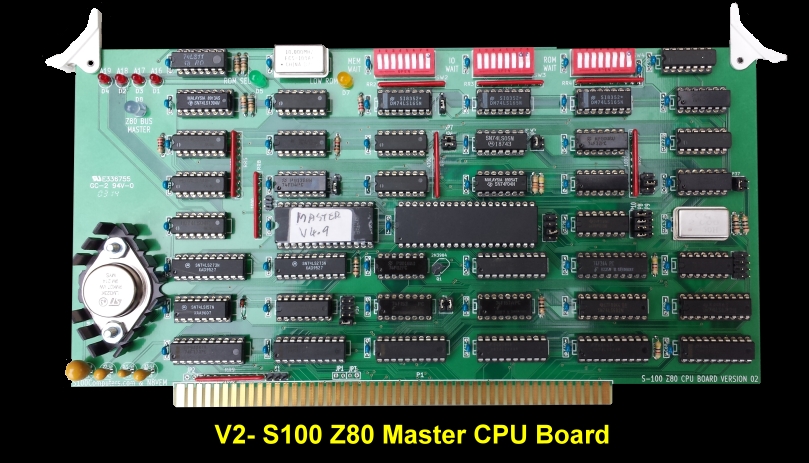
| 1. | Allow the user to partition an onboard 28C64 EEPROM into an upper and lower 4K window so that in effect an 8K monitor can be utilized, yet taking up only 4K of the CPU's address space. | |
| 2. | Add an LED to indicate whether the Z80 is addressing the upper or lower 4K portion of the EEPROM | |
| 3. | Add jumpers so older 2732, 27C64 or 28C64 etc. PROMS can still be used | |
| 4. | Add an LED (blue) to indicate when the Z80 has control of the S-100 Bus in a master/slave arrangement with other CPU's. |
 |
 |
 |
| Jumper | Function |
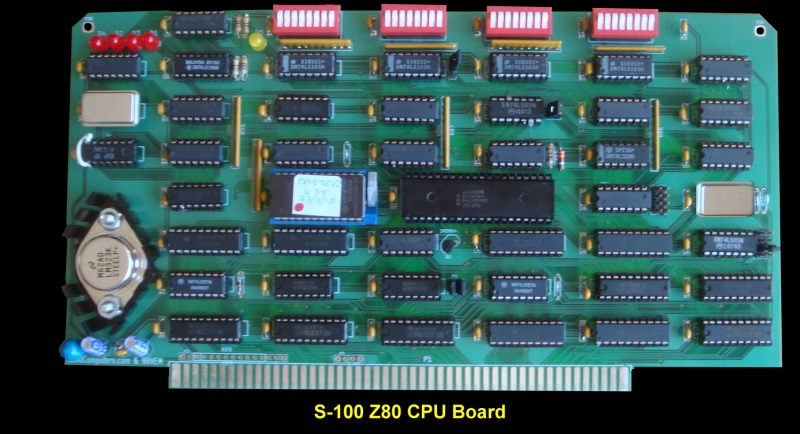
| JP5,JP6,JP4,JP7 | Used only if the board is to act as a bus master or are not generated by a front panel board. Generates Power On, Reset etc. |
| JP4, 1-2 | Use only if no other board generates the S-100 2MHz clock signal when the Z80 is active |
| JP4, 3-4 | Use only if no other board generates the S-100 MWRT signal when the Z80 is active |
| SW4 (ROM WAIT) | Sets number of wait states for onboard EEPROM (0-8). I use 2 wait states, so switch 8 (right most two switch) ere closed, the rest are open |
| P36 | Allows wait states. 1-2, every sINTA, 3-4, M1 memory bus cycles, 5-6 All Memory cycles. I use 3-4. |
| SW2 (ME WAIT) | Sets number of wait states for P36 options. I use 2 wait state for M1 cycles only, so switch 8 (right most two switchs) are closed, the rest are open |
| SW3 (I/O WAIT) | Sets number of wait states for port I/O cycles. I use 2 wait states, so switch 7 & 8 (right most switches) closed, the rest are open |
| K2 | Normally set 2-3, however older pre-IEEE 696 boards (for example the Cromemco dazzler board) often require 1-2. |
| P37 | Normally 1-2 (Partial latch mode). |
| P39, J88, JP9 | These jumpers are to configure different EPROMS and EEPROMS. (For a 28C64:- P39 5-6, JP8 1-2, JP9 open). |
| P2, 5-6 | Memory window configuration port. I use I/O port D0H |
| P3. | No jumpers. This sets the PROM boot address to F000H. |
| JP1, JP2, JP3 | This provides extra ground lines on board IF ALL boards meet IEEE-696 specs. Normally unconnected. |
 |
 |
 |
 |
This page was last modified on 04/25/2026